
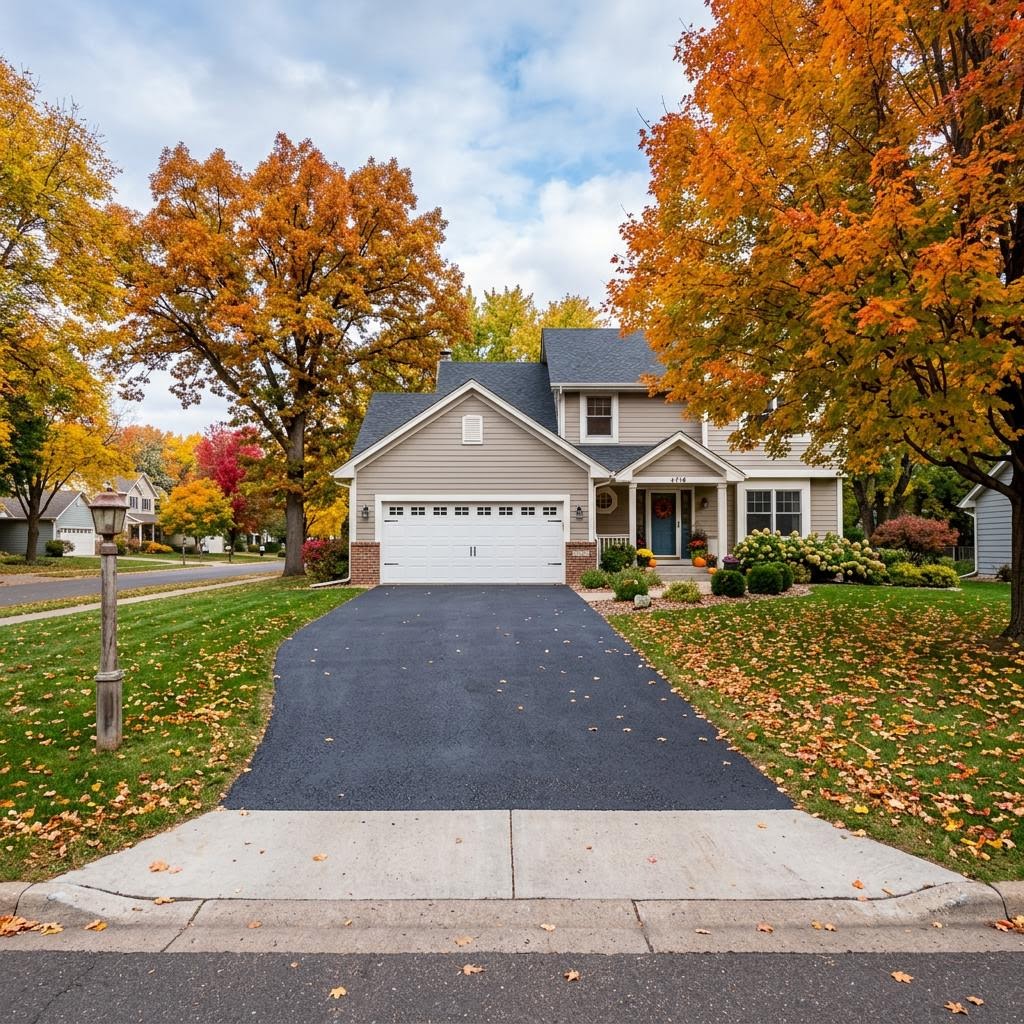
October is here, the leaves are turning, and that worn driveway is still on your project list. Is it too late to replace it before a Minnesota winter? Not necessarily. An October installation can be a good option when the weather and site conditions cooperate, but there isn't a single cutoff date that works for every property. For homeowners in Maple Grove, Plymouth, Brooklyn Park, and across the Twin Cities, the right decision depends on the material, the ground beneath it, and the forecast — not just the month on the calendar.
Look beyond the afternoon temperature. A mild afternoon doesn't tell the whole story. Your contractor needs to consider air and ground temperatures, overnight lows, wind, rain, and how conditions will change during the work. Cold ground can draw heat out of fresh materials even when the air feels comfortable. A forecast with frost or several wet days may leave too little room to prepare the site and install the driveway properly. Temperature requirements also vary with the material and project specifications, so one number on a weather app isn't a reliable go-ahead.
Asphalt needs enough time for proper compaction. A new asphalt driveway is placed hot and compacted with rollers before the mix cools too far. Cooler air, a cold base, and wind can shorten that working window. The thickness of each layer and the timing of deliveries matter, too. If the crew cannot achieve proper compaction, the pavement may be more vulnerable to water penetration and premature wear. A suitable October day can work; rushing a job into unsuitable conditions just to finish before winter is not worth it.
Concrete needs a plan for the days after placement. Concrete hardens through a chemical reaction, and colder temperatures slow setting and strength gain. That matters for a driveway project with a concrete apron as well as other concrete surfaces. Fresh concrete must be protected from early freezing and moisture loss. Depending on conditions, a professional cold-weather plan may involve temperature-controlled concrete, insulating blankets, or other protection. Accelerating admixtures are not antifreeze and do not replace curing and freeze protection. Ask how the concrete will be protected and when it will be ready for vehicle traffic rather than assuming a standard number of days.
The base cannot be an afterthought. Replacing a driveway means more than removing the old surface and putting down a new one. The underlying soil and aggregate need to support the pavement, and grading needs to direct water away from the home and garage. Rain-soaked, soft, or frozen ground can prevent proper preparation and compaction. Concrete also needs contact surfaces free of ice and snow and above freezing before placement. If unsuitable ground conditions cannot be corrected properly, waiting is better than hiding the problem beneath a new surface.
When does proceeding in October make sense? The site is ready, the forecast provides a suitable installation window, and any required protection can be maintained afterward. Materials, crew scheduling, and any local permits also need to line up before demolition begins. Ask your contractor what happens if the weather changes and whether asphalt paving and concrete apron work require separate timing. These are project-specific decisions — neither an estimate nor a warm forecast guarantees that the work can be completed this fall.
When is spring the better choice? If the forecast leaves too little margin, the ground is saturated or frozen, or adequate concrete protection isn't practical, postponing the replacement may be the responsible option. Spring work still needs thawed ground that has dried enough for proper preparation; the first warm day isn't automatically the right start date. In the meantime, ask about appropriate temporary measures for potholes, uneven areas, or drainage concerns. An assessment now can help you understand the scope and plan ahead without committing to a rushed fall installation.
Not sure which option fits your property? John & Jerry can assess your driveway and discuss whether a late-season project is practical or planning for spring makes more sense. Request a free estimate or call 763-220-0195. The goal is a driveway installed under the right conditions — not simply a job finished before the calendar turns.